The floral recipe pricing guide every florist needs starts with one truth: creativity means nothing if your business isn’t profitable.
Many talented designers undercharge for their work, miscalculate supply costs, or skip labor altogether. The result? Shrinking margins and financial stress.
In this comprehensive guide, you’ll learn exactly how to price floral recipes, calculate labor, and maintain consistent profit margins for every event. You’ll also see how True Client Pro automates these calculations so you can focus on design, not spreadsheets.
Why Floral Recipe Pricing Matters
Pricing is not guesswork—it’s strategy. Without a structured system, florists lose 20–30% of revenue to underpricing or overordering. A well-built recipe pricing method ensures that every stem, ribbon, and labor hour contributes to profit.
Key Benefits of Recipe Pricing
- Transparency between cost and value
- Predictable profit per arrangement
- Simplified ordering and inventory control
- Confidence in proposal pricing
In short, recipe pricing is how successful florists stay sustainable.
Step-by-Step Floral Recipe Pricing Guide
Step 1: Track True Costs
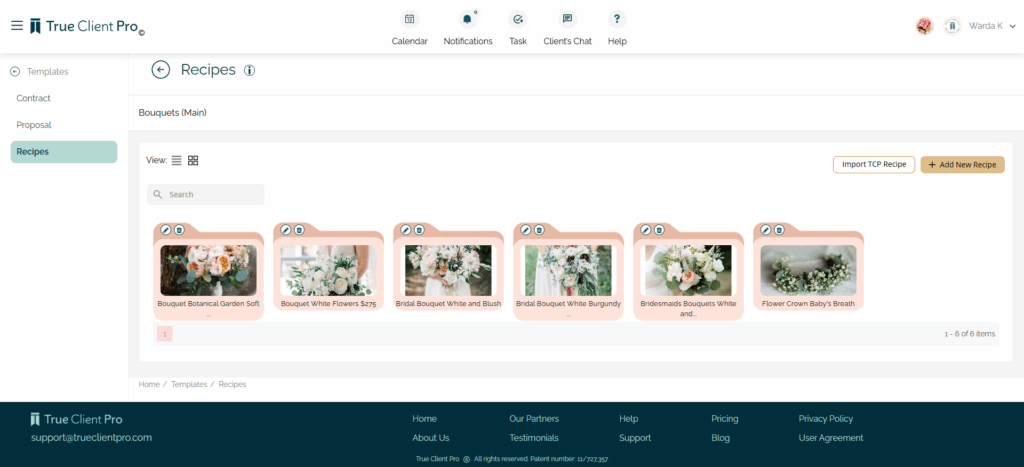
Start by identifying every component of your design: flowers, foliage, mechanics, ribbon, and vases. Use your wholesaler price list or upload it directly into True Client Pro’s Product Library for real-time cost tracking.
Pro Tip: Include waste and shrinkage (usually 5–10%). A few broken stems can cost you more than you think.
Step 2: Calculate Labor Accurately
Labor is a hidden expense most florists underestimate. Whether it’s your time or your team’s, it should account for 20–35% of the total cost.
Example:
If materials cost $100, add $30 for labor.
This ensures you’re paid fairly for design, setup, and delivery.
True Client Pro automatically builds this calculation into each recipe so you never forget to charge for your time.
Step 3: Apply the Right Markups
Markup ensures you earn a sustainable profit. Typical multipliers are:
- Fresh flowers: 3x–3.5x cost
- Hard goods: 2x–2.5x cost
- Labor: 1.5x to cover taxes and overhead
You can set these markups once in True Client Pro and apply them across all recipes automatically.
Step 4: Set Your Profit Target
Every event should have a clear gross margin goal. Aim for at least 65% to remain profitable after expenses.
True Client Pro’s Profit Projection Report lets you see margins per event and adjust pricing before proposals are sent.
Step 5: Link Recipes to Proposals
Manually copying costs into proposals invites errors.
In True Client Pro, recipes connect directly to proposals—updating prices automatically when costs change. This keeps every client quote accurate and consistent.
Advanced Tips to Maximize Profitability
1. Standardize Your Process
Create templates for common designs: bridal bouquets, centerpieces, arches. Standardization speeds up proposals and improves consistency.
2. Review Seasonal Price Shifts
Update supplier pricing quarterly. Seasonal flower cost changes can alter profit margins significantly.
3. Track Real vs. Projected Profits
After each event, compare actual expenses with projections. True Client Pro stores this data so you can analyze and improve your pricing accuracy over time.
4. Introduce Add-Ons
Upsell candle styling, delivery upgrades, or setup fees within your proposals. Even small add-ons can boost profit per event by 10–15%.
Common Mistakes Florists Make
- Emotional Pricing – Charging based on “what feels right” rather than data.
- Ignoring Supplies – Forgetting foam, pins, tape, and mechanics.
- Skipping Labor Charges – Not valuing your time leads to burnout.
- Over-Ordering – Buying 20% more stems than needed erases profit.
- Inconsistent Markups – Changing markup by mood instead of method.
True Client Pro eliminates these inconsistencies with automation, recipe linking, and cost tracking in one unified system.
Success Story: From Guesswork to Growth
Wildflower & Co., a boutique floral studio in California, once struggled with manual pricing. Their proposals varied widely, and profit margins were unpredictable.
After adopting True Client Pro’s Recipe Calculator, they standardized costs, tracked labor, and achieved a 38% increase in profit within six months.
Their owner says, “I finally understand my numbers. True Client Pro shows me exactly how much I make per event—it’s empowering.”
FAQs About Floral Recipe Pricing Guide
Q1: How often should I update my flower costs?
At least quarterly. Wholesale prices shift seasonally, and updating costs keeps your proposals accurate.
Q2: How can software help me price faster?
True Client Pro calculates stem costs, labor, and markups instantly, saving hours per proposal.
Q3: What profit margin should florists aim for?
Most professionals target 60–70%. TCP’s Profit Projection helps you track this automatically.
Q4: Can I use one pricing system for both weddings and events?
Yes. Build design categories in True Client Pro for both, applying different markups if needed.
Q5: What’s the biggest mistake florists make?
Guessing instead of calculating. Profitability starts with precise data, not intuition.
Conclusion
Pricing is the foundation of every successful floral business. When you understand your costs, standardize markups, and track profit, your creativity can truly flourish.
With True Client Pro, florists gain a clear pricing system that:
- Automates cost and labor calculations
- Syncs recipes directly to proposals
- Tracks real-time profit margins
- Reduces pricing errors and overordering
Want to simplify your floral pricing?
Start your free True Client Pro trial today and turn your creativity into consistent profit.
Check out our Floral Recipe Templates here.
If this floral recipe pricing guide helped you, share it with another florist or planner ready to grow profitably.
Every share strengthens the floral community and helps more designers thrive sustainably.