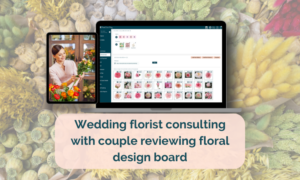
Running a successful floral business requires a clear wedding florist workflow that guides every event from the first client inquiry to the final installation. Wedding florists must coordinate consultations, proposals, pricing, floral designs, and event logistics while keeping all details aligned.
Many florists organize inquiries, proposals, pricing, and event planning using florist CRM software that keeps the entire wedding workflow in one place.
A structured wedding florist workflow helps florists respond to inquiries faster, present professional proposals, calculate accurate pricing, and manage event production without losing important information.
This guide explains the complete wedding florist workflow and how florists organize each stage of a wedding event from inquiry to installation.
Table of Contents
Table of Contents
Conducting the Florist Consultation
Calculating Wedding Flower Pricing
Creating Floral Recipes and Production Plans
Contract Approval and Event Booking
Floral Production and Event Installation
How Florist CRM Software Supports the Workflow
Wedding Florist Workflow Stage 1 Capturing the Wedding Inquiry
Every wedding floral project begins with an inquiry from a potential client.
Clients usually contact florists through website forms, email, social media, referrals from planners, or venue recommendations.
At this stage, florists gather important information such as
Event date
Venue location
Estimated guest count
Design style or inspiration
Budget expectations
Collecting this information early helps florists determine whether the event is a good fit and prepares them for the consultation.
Many florists use structured inquiry forms to capture these details.
Learn more about how florists collect inquiries using lead capture forms
Wedding Florist Workflow Stage 2 Conducting the Florist Consultation
After reviewing the inquiry, florists schedule a consultation with the client.
The consultation allows the florist to understand the client’s vision and discuss the event in detail.
During the consultation, florists review
Color palette and design inspiration
Ceremony and reception floral needs
Venue layout and décor requirements
Flower preferences
Budget expectations
This meeting helps the florist determine the scope of the event before creating a proposal.
Learn more about florist consultations
Wedding Florist Workflow Stage 3 Preparing the Floral Proposal
After the consultation, the florist prepares a detailed floral proposal.
A proposal outlines the floral designs and estimated investment required for the event.
Floral proposals usually include
Arrangement descriptions
Flower varieties
Rental items
Delivery and installation details
Pricing estimates
A well-structured proposal helps clients visualize the floral design and understand the investment.
Learn how florists structure proposals
Wedding Florist Workflow Stage 4 Calculating Wedding Flower Pricing
Pricing wedding flowers accurately is essential for running a profitable floral business.
Florists must consider several factors when calculating wedding flower pricing.
Wholesale flower costs
Design labor
Delivery and installation logistics
Rental inventory
Business overhead
Without an organized pricing system, florists may unintentionally underprice their work.
Learn more about pricing wedding flowers
Wedding Florist Workflow Stage 5 Creating Floral Recipes and Production Plans
Once the proposal is approved, florists begin planning production for the event.
Floral recipes help florists organize the ingredients required for each arrangement.
Recipes typically include
Flower varieties
Stem quantities
Design mechanics
Arrangement structure
Floral recipes allow florists to prepare wholesale orders and organize production timelines.
Learn more about floral recipe planning
Wedding Florist Workflow Stage 6 Contract Approval and Event Booking
Before production begins, the client signs a contract and submits a deposit.
Contracts confirm the event details and secure the date on the florist’s calendar.
Contracts typically include
Event date
Floral designs
Payment schedule
Delivery and installation details
This step ensures both the florist and the client understand expectations.
Wedding Florist Workflow Stage 7 Floral Production and Event Installation
As the event approaches, florists begin preparing the arrangements and organizing delivery logistics.
This stage includes
Flower conditioning and processing
Designing arrangements
Packaging and transportation
On-site installation
Florists often coordinate with planners and venues to ensure a smooth installation process.
A well-organized workflow helps florists manage multiple events while maintaining design quality.
How Florist CRM Software Supports the Workflow
Managing every stage of the wedding florist workflow manually can be overwhelming.
Many florists use florist CRM software to organize inquiries, consultations, proposals, contracts, and event planning within a single system.
CRM software helps florists
Track inquiries
Manage consultations
Create proposals
Organize contracts and payments
Plan floral recipes and event production
By connecting all stages of the workflow, florist CRM software helps businesses operate more efficiently and deliver a better client experience.
Learn more about florist CRM software
Additional Resources for Wedding Florists
Florist Wedding Proposal Template
Wedding Flower Planning Resources
Wedding florists often rely on industry resources and floral organizations when planning events and calculating flower quantities.
Helpful resources include:
Wholesale flower availability and seasonal guides
Flower care and handling information from the Society of American Florists
Seasonal flower availability charts
These resources help florists plan events, source flowers, and stay informed about industry trends.
Common Mistakes in the Wedding Florist Workflow
Even experienced florists sometimes struggle with workflow management. A few common mistakes can create delays or confusion during the planning process.
Incomplete inquiry forms
When florists do not collect sufficient information during the inquiry stage, consultations and proposal preparation take longer.
Unclear pricing structure
Without a clear pricing method, florists may underestimate labor, flower costs, or installation time.
Disorganized design planning
Floral recipes and production plans help florists track flower quantities and prepare wholesale orders accurately.
Lack of workflow systems
Many florists try to manage events through scattered emails and spreadsheets. Structured systems help keep all client information organized.
A clear wedding florist workflow helps eliminate these issues and ensures that each event runs smoothly.
Manual Workflow vs Florist CRM Workflow
Many florists manage wedding projects using email, spreadsheets, and handwritten notes. While this method can work for small businesses, it often becomes difficult to manage as the number of events grows.
Manual workflow often involves
Email inquiries
Multiple spreadsheets
Separate proposal documents
Manual pricing calculations
Paper contracts
Florist CRM workflow systems allow florists to manage
Client inquiries
Consultations
Proposals
Contracts and payments
Floral recipes
Event timelines
By organizing these steps in one place, florist CRM systems help businesses operate more efficiently and reduce administrative work.
Frequently Asked Questions
What is the wedding florist workflow?
The wedding florist workflow is the step-by-step process florists follow when managing a wedding event from the first inquiry to the final installation.
Why is a florist workflow important?
A structured workflow helps florists stay organized, communicate clearly with clients, and manage multiple events efficiently.
How do florists organize wedding projects?
Many florists use digital systems such as florist CRM software to manage inquiries, proposals, pricing, floral recipes, and event planning.
Streamline Your Wedding Florist Workflow
Managing wedding flowers requires more than design skills. Florists must coordinate client communication, pricing, floral recipes, and event logistics.
A clear workflow helps florists guide each project from inquiry to installation while keeping every detail organized.
If you want to simplify your workflow and manage events more efficiently, explore how True Client Pro helps florists organize inquiries, proposals, pricing, and production in one platform.
Learn more about florist CRM software
Example Wedding Florist Workflow Timeline
Many florists follow a timeline to keep wedding planning organized.
6 to 12 months before the event
Inquiry, consultation, and proposal preparation
4 to 6 months before the event
Contract approval and initial design planning
2 to 3 months before the event
Floral recipe planning and flower ordering
1 week before the event
Flower processing and design production
Event day
Delivery, installation, and event coordination
Following a structured timeline helps florists manage multiple weddings while maintaining quality and organization.
Conclusion
Managing wedding flowers requires more than beautiful designs. Florists must also coordinate communication, pricing, production planning, and event logistics.
A clear workflow helps florists guide each project from inquiry to installation while keeping important details organized.
By combining strong design planning with well-organized business systems, wedding florists can deliver exceptional events while running an efficient, profitable business.
If you want to streamline your wedding florist workflow, explore how florist CRM software can help organize inquiries, proposals, pricing, and event planning.